two african-american organizations are coming to Boston for major conventions this summer, a breakthrough for a city with a national reputation for not being welcoming to people of color.
 |
|
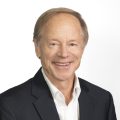
James Rooney, executive director of the Massachusetts |
The Urban League, with more than 3,000 delegates, is hitting town in late July and Blacks in Government, with about 5,000 attendees, is coming in August. The Urban League hasn’t held a convention in Boston since 1976, the same year that anti-busing demonstrator Joseph Rakes attacked Theodore Landsmark with a flag on City Hall Plaza. Blacks in Government has never been to Boston.
Wooing the two groups took a lot of time and effort. James Rooney, executive director of the Massachusetts Convention Center Authority, says he began reaching out to convention groups representing people of color in 2002. The word he heard back from meeting planners for the groups was: “Why would we bring black people to Boston to have a conference?”
Rooney admits the question caught him off-guard, but then he says he decided to embrace it. “Sometimes the first step is to acknowledge the perception is real in the minds of people who have it,” he says.
Polling suggests the perception is widely held. A national online poll of 1,500 people conducted by Chadwick Martin Bailey in April 2010 asked African-Americans to rate 10 major cities on how welcoming they were to people of color. Boston ranked last, with 22 percent of African-Americans giving Boston a poor rating and 40 percent rating it fair. Philadelphia, by contrast, received a poor rating from only 4 percent of those surveyed and a fair rating from 25 percent. Boston was also the only city that received lower ratings from African-Americans who had actually visited it than from African-Americans who had never been here.
To attract more diverse conventions, Rooney reached out to people of color in Boston and together they developed a two-pronged strategy. First, they invited meeting planners representing multicultural groups to come to Boston when the Dimock Center was hosting its annual Steppin’ Out fundraiser, a popular event where people of all races mix easily. The planners were also invited to a luncheon where they could meet and talk with people of color from across the city.
Darnell Williams, president of the Urban League of Eastern Massachusetts, says the goal was to answer any questions the meeting planners had about race in Boston. “Our job was not to sugarcoat our history at all,” he says. “We wanted them to interface with folks that look like them so they wouldn’t think that Boston is just an enclave of white people. They didn’t know this city as a majority-minority city.”
According to the 2010 Census, Boston is 47 percent white, 22 percent African-American, 17 percent Hispanic, 9 percent Asian, and 4 percent other races.
Marc Morial, the president of the Urban League and the former mayor of New Orleans, says the election of Deval Patrick as governor of Massachusetts changed a lot of perceptions about the state and Boston. During a preconvention visit to Boston in May, Morial met with Patrick and Boston officials. He said he thinks delegates will be surprised by what they find when they look around the city this month.
“It is a chance for Boston to showcase the transformation taking place in the city,” he says.
Michelle Shell, the head of the Convention Center Authority board, chooses her words carefully in discussing Boston’s troubled racial history and the problems that history has caused when it comes to enticing multicultural organizations to hold conventions here.
“The meeting planners have been very blunt about it,” says Shell, an African-American who grew up on Long Island and came to Massachusetts in 1993 to attend MIT. She currently works as a vice president at a subsidiary of Fidelity Investments. Shell says this summer’s conventions offer a chance to dispel the city’s negative image. “The reputation we continue to have among multicultural groups is not deserved,” she says.
During the Urban League convention, which opens on July 27, Microsoft founder Bill Gates will sit down for an hour-long conversation with Harvard professor Henry Louis Gates Jr. At press time it was unclear what the two men will discuss, but professor Gates undoubtedly can offer insights on race relations in the Boston area. In 2009, he returned from a trip abroad and found the door to his Cambridge home jammed. As Gates, who is black, tried to gain entrance, a neighbor called police, thinking a robbery was in progress. Once police arrived, tensions flared and Gates was arrested. Gates and the white policeman who arrested him later sat down for a “beer summit” on race at the White House with President Obama and Vice President Joe Biden.