BOWING TO OPPOSITION from President Trump, the Healey administration on Monday put its offshore wind plans on hold yet again and said it is committed to an “all-of-the-above approach to energy.”
Price negotiations between the state’s utilities and two offshore wind developers were supposed to wrap up on Monday, but the parties filed a brief statement saying they couldn’t reach a deal “due to ongoing uncertainty caused by federal level activities.” The deadline was pushed back to December 31, the third time the timeline has been extended since Trump was elected.
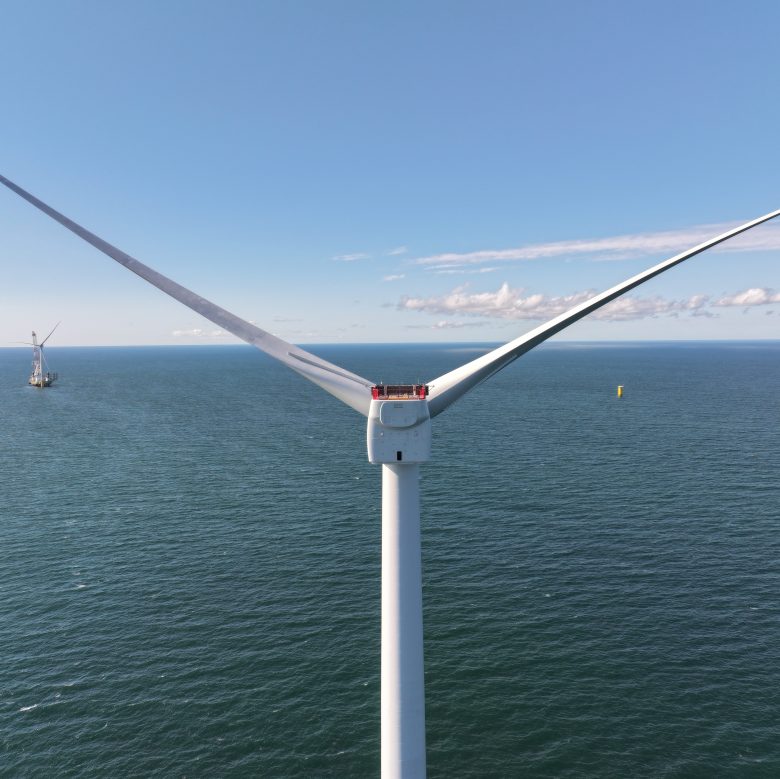
One wind farm – Vineyard Wind – is currently under construction off the Massachusetts coast. Bids for two other wind farms were accepted by the Healey administration in September 2024, but the developers and the state’s three utilities have been unable to reach agreement on a pricing contract because of the uncertainty in Washington.
The new delay – and the likelihood that offshore wind contract deadlines will continue to be extended as long as Trump is in office – means Gov. Maura Healey will need to come up with a new climate strategy. The current strategy relies heavily on electrifying the housing and transportation sectors, but that approach will only reduce greenhouse gas emissions if the electricity being used is generated without fossil fuels.
Offshore wind farms were expected to play a key role in decarbonizing electricity production, but Trump’s opposition to new and existing offshore wind projects has cast a pall over the industry. Republicans in the US Senate are now trying to deliver a death blow, doing away with existing tax credits and proposing a new excise tax on solar and wind projects that could drive prices up by an estimated 10 to 20 percent.
Healey has not come up with a Plan B climate strategy yet, although a spokeswoman for the Department of Energy Resources issued a one-paragraph statement hinting at a new approach.
“Massachusetts is committed to an all-of-the-above approach to energy, including offshore wind,” said the statement. “Offshore wind produced locally in Massachusetts will help lower costs, create thousands of jobs, and move us toward energy independence.”
What’s unclear is what’s included in the all-of-the-above approach. An administration spokesperson did not respond to a request for clarification. Sen. Michael Barrett of Lexington, the Senate chair of the Legislature’s Telecommunications, Utilities, and Energy Committee, said he could only guess the governor’s intent. “I think the plain meaning of the words should be a guide,” he said.
When former Gov. Charlie Baker used the “all-of-the-above” phrase in 2015, he said he wanted to develop solar and offshore wind as well as bring more natural gas into the region. Healey opposed pipeline expansion in 2015 and has bragged in the past about blocking gas pipelines coming into the region.
Even so, New York Gov. Kathy Hochul succeeded in convincing Trump to allow an offshore wind farm off the coast of her state to resume construction after she agreed to consider adding natural gas pipeline capacity.
Two other energy options available to Massachusetts are importing more hydro-electricity from Canada and expanding the region’s nuclear power capacity. Massachusetts has already procured additional hydro-electricity from Quebec and is now waiting for the transmission line that will carry the power into New England to be completed.
Barrett said he thinks nuclear power expansion is more likely than construction of a new gas pipeline, but he acknowledged that there is a lot of uncertainty right now on the energy front.
One of the developers, Ocean Winds, has indicated it will not move forward until the situation in Washington becomes clearer. In a filing earlier this month with state regulators, Ocean Winds said Massachusetts should review the situation every quarter until the federal outlook becomes more stable or Trump leaves office in 2029.
Avangrid, the other wind farm developer, submitted a heavily redacted filing to state regulators that didn’t say whether it would proceed with its project. But the company said the procurement process must change to give developers more flexibility in dealing with the roadblocks thrown up by a presidential administration opposed to offshore wind.
“These experiences demonstrate that if the Commonwealth wants to ensure that offshore wind projects get built—which they must do to serve growing energy demand and accomplish Massachusetts’ climate goals—the model of procurement must fundamentally change,” Avangrid said. “It must transition to a model based on flexibility and shared risk. Without this change, offshore wind will not succeed.”