


What is Evacuation Day anyway, and why is it such a big deal that it’s a holiday (in Suffolk County)? That question has long bewildered newcomers to Massachusetts – and more than a few long-term and lifelong denizens as well. That the March 17 holiday coincides with St. Patrick’s Day – observed prominently in a region with such strong demographic ties to Ireland — only compounds the confusion. The battle of March 17, 1776, in Boston marked the first major Patriot victory of the American Revolution, and its commemoration takes on even greater significance this year as part of the 250thanniversary of the Declaration of Independence.
On the morning of March 6th, 1776, General William Howe, the commander of 10,000 British elite troops occupying Boston, woke up to quite a shock. Overlooking and threatening his army occupying the town and his fleet moored in Boston Harbor were more than 20 cannons freshly installed overnight on Dorchester Heights by the Continental Army. A stunned Howe exclaimed, “My God, these fellows have done more work in one night than I could make my army do in three months.”
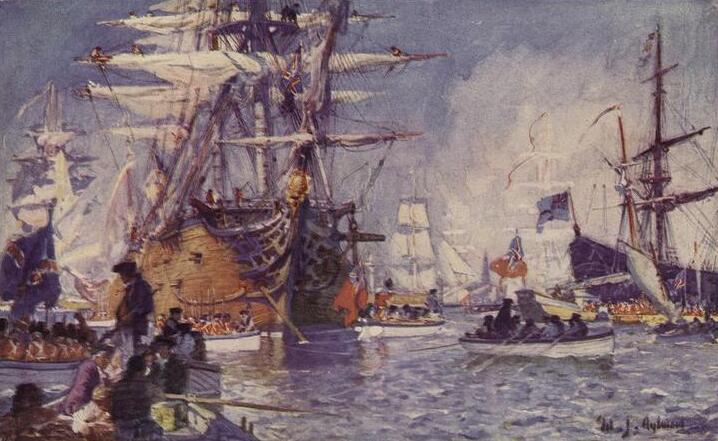
Eleven days later, those British troops and over 1,000 American Tory Loyalists set sail, surrendering Boston to the upstart Americans on what we now celebrate every March 17th as Evacuation Day. American morale soared, French interest in alliance flourished, and the British Parliament was shocked.
The commander of the Continental Army was George Washington, and this was his first victory. The joyous Continental Congress commissioned its first celebratory medallion. Now a crown jewel of the Boston Public Library, it is called “Washington Before Boston” and bears a Latin phrase — Hostibus Primo Fugatis — “the enemy for the first time put to flight.”
The central hero of this victory was a true son of Boston, Henry Knox. His father’s financial failure forced Henry to leave Boston Latin School at age nine and become a bookseller’s apprentice. Impressed by his intelligence, the owners encouraged Henry to read, and he chose to focus on military engineering.
Knox became an early member of the Sons of Liberty and in 1770 had been on the scene of the Boston Massacre trying to calm things before the infamous firing by the British troops. By 1775, he had become the owner of his own successful bookshop. But the unfolding events led him to flee the city with his pregnant wife and surrender his property in order to pursue the cause of liberty.
On an early inspection tour of his motley assembly of militias, Washington spotted Knox’s talent. He added him to his command and soon tasked him with an audacious plan – to fetch 60 captured British cannons from Fort Ticonderoga, 300 hundred miles away. This would give the Continental Army the artillery it needed to lay effective siege to the British, who conveniently enough had ceased military operations, settling into “winter quarters” in Boston.
Knox, commanding teams of horses and oxen manned by teamsters, managed to drag the 60 tons of weapons through one of the fiercest recorded winters, mostly without roads, including traversing partly frozen rivers multiple times and scaling the Berkshire Mountains.
It was an extraordinary feat requiring endless tenacity, sustaining the commitment of his small force and plenty of problem-solving ingenuity. Many people doubted Knox could succeed, but Washington believed in the pluck and skill of this 25-year-old self-taught leader.
Knox would go on to command the artillery and military engineering throughout the rest of the Revolutionary War, playing crucial roles in the crossing of the Delaware in the desperate attack of Christmas, 1776, as well as in the artillery duel that secured the victory at Yorktown. He is credited with the launch of the Armory in Springfield and the founding of West Point. He was eventually appointed the first ever Secretary of War in Washington’s initial Cabinet.
Henry Knox is a hero because the Patriot side won; had we lost, he would likely have been hanged as a traitor. He showed fortitude and fearlessness in solving a huge challenge and defying daunting odds in getting those cannons to Boston. The rest is both history and inspiration for our trying times.
Chris Gabrieli is chair of the Massachusetts Board of Higher Education and a lecturer at the Harvard Graduate School of Education. Bob Rivers is executive chair and chair of the board of Eastern Bank and chair of the MA250 executive committee, leading the celebration of Evacuation Day and other events.
