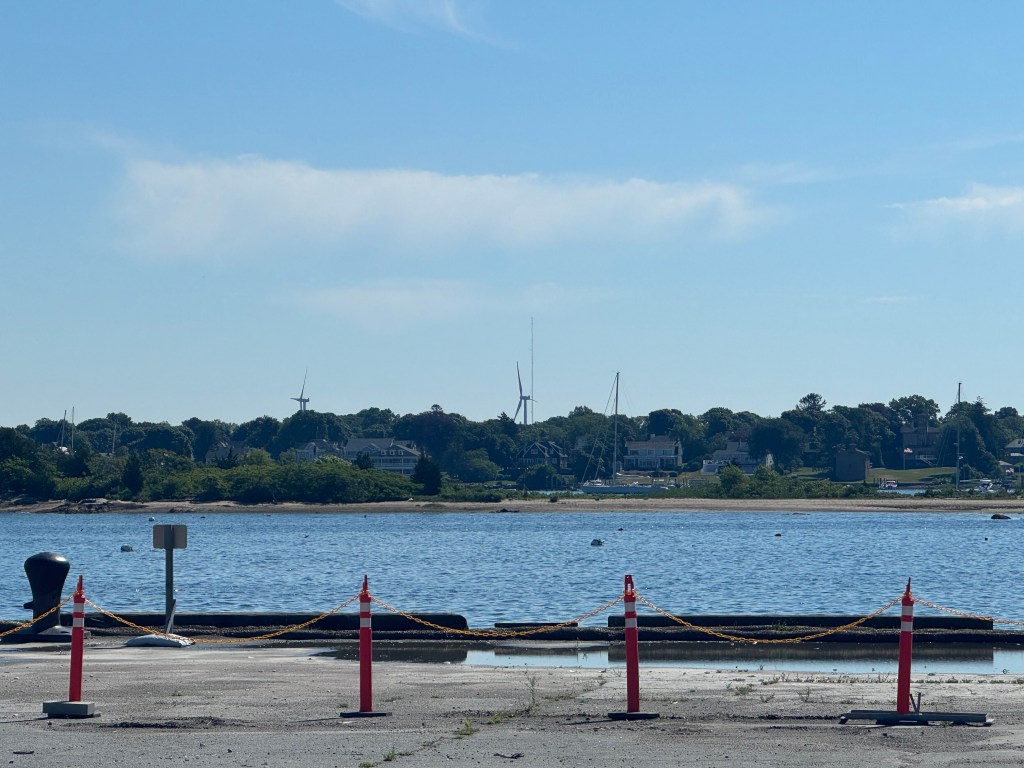
VINEYARD WIND 1, the country’s first commercial-scale offshore wind project located off the coast of Martha’s Vineyard, is finally up and running after years of starts and stops — just not at full capacity.
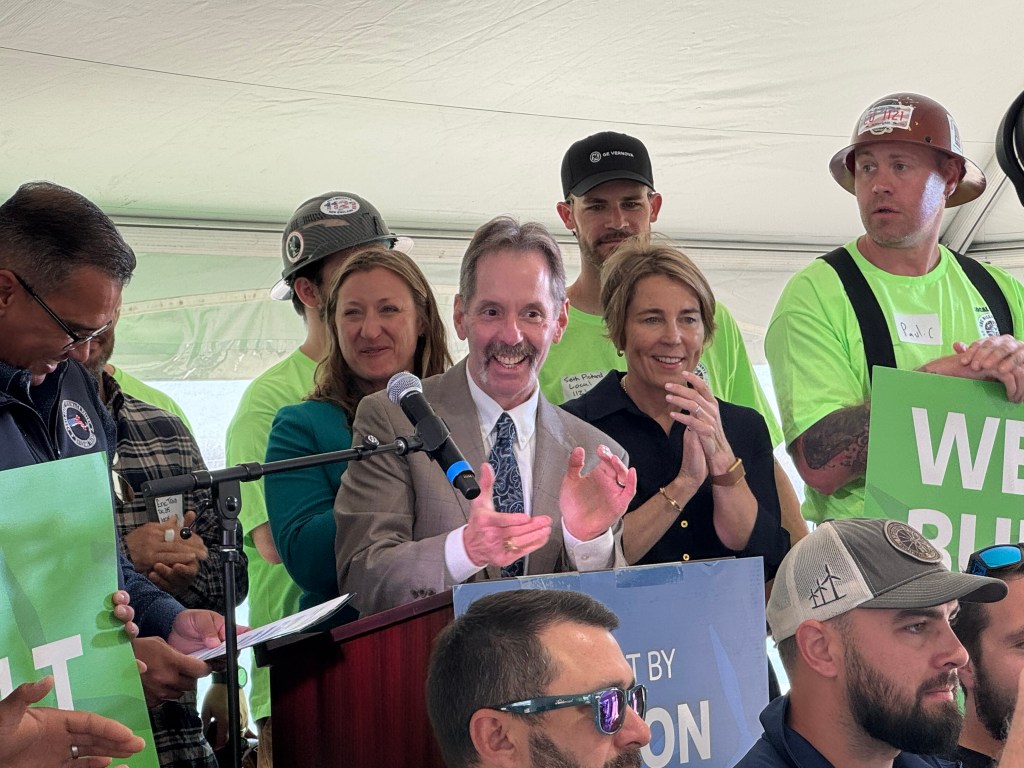
Gov. Maura Healey along with Massachusetts labor and energy leaders celebrated on Wednesday the completion of the project — which concluded construction in March — in New Bedford, touting its benefits while shrugging off the wind development company’s recent financial disputes that have made headlines and threatened the project.
New Bedford’s Marine Commerce Terminal served as the main gathering point for materials that were transported to the site of Vineyard Wind 1, including turbine components that were prepared for installation. The terminal will continue to serve as Vineyard Wind’s site of operations and maintenance. Over 1,500 union members worked under a project labor agreement out of the terminal.
The $4.5 billion project has supported nearly 4,000 jobs since it began, and operations and maintenance are expected to sustain between 80 and 100 jobs per year moving forward. Vineyard Wind will save Massachusetts families and businesses an estimated $1.4 billion on their electricity bills and will generate enough clean, affordable energy to power over 400,000 homes and businesses in New England, Healey said. The project will reduce carbon emissions by over 1.6 million tons per year, according to Vineyard Wind’s website.
But in April, Vineyard Wind sued its turbine supplier, GE Vernova, alleging that the company had breached its contract after it sent a notice threatening to terminate their agreement because it had not been paid $360 million. Vineyard Wind has argued that GE owes the company more than $800 million for multiple project delays and the costly impacts of a turbine blade that snapped in 2024 and washed up on the shores of Nantucket. A judge this month issued a preliminary injunction requiring GE to continue servicing and maintaining the turbines.
The wind farm is producing power at less than half of its expected 800-megawatt capacity, which is below what is needed for the project to comply with its financing obligations, The New Bedford Light reported this month. Of the 62 turbines, 36 are not spinning, according to Vineyard Wind’s attorney. The company has blamed GE for not keeping up with repairs to bring the wind farm up to capacity.
And just this month, Boston landlord BP Hancock LLC filed a lawsuit against one of Vineyard Wind’s parent companies, Vineyard Offshore, alleging it has been in default for several months on its rent and owes nearly $1.2 million.
When asked whether she has concerns about the two financial disputes tied to Vineyard Wind, Healey answered bluntly: “I don’t.”
“This is litigation between private parties,” she told reporters. “What I’m really psyched about is what the workers were able to do here and the energy that we’re able to bring online that’s going to help drive down energy costs for people in New England.”
The project has faced significant hurdles under President Trump’s second term. In January 2025, Trump issued an executive order halting new leases for offshore wind. In December, a judge struck down the order, but no new wind leases have been issued by the Bureau of Ocean Energy Management.
Later that month, the Trump administration paused the leases of five wind projects, including three in Massachusetts, due to “national security risks identified by the Department of War.” The decision was challenged in court, and the Vineyard Wind project was granted a preliminary stay from a federal judge in January, allowing it to resume construction. Vineyard Wind 1 developers said they were losing $2.3 million per day while the project was paused.
Meanwhile, the delays have driven the city of New Bedford further from the economic boom they expected to see from offshore wind. The marine terminal has not been able to secure tenants for future wind projects.
In March, Healey signed an executive order directing her administration to secure 10 new gigawatts (GW) of energy for Massachusetts by 2035, as well as 5 GW of new energy storage. Senate Democrats Wednesday morning proposed legislation that would set a new goal of 10 GW of offshore wind power secured by 2040.
Citing residents’ soaring utility bills, Healey emphasized the need to “get these things going as quickly as possible.” Massachusetts households have some of the highest energy costs in the country. The summer heat now threatens to push electricity demand and utility bills higher yet.
“Every day, we’re beholden to some foreign country far, far away, and every day, we’re beholden to utility companies that are playing with the markets. That’s not right. We can do better,” Healey said at the celebration of the project. “Massachusetts is where the offshore wind industry is born in this country and where it’s going to take off from, and Vineyard Wind is showing us what is possible.”